Yousician: Learn & Play Guitar
- 4.4
- Rating
- 50.00M
- Installs
- Free
- Price

 Analysis by App-foxy
I approached Yousician: Learn & Play Guitar as someone who wanted a practical way to keep guitar practice moving on ordinary days, not as a replacement for a patient teacher sitting beside me. That distinction matters. The app turns a phone or tablet into a guided learning companion, but the quality of the experience depends on more than the lesson content. Your instrument, room, headphones, microphone, and internet connection all influence how smoothly the session feels.
Yousician is a free education app from Yousician Ltd. with optional in-app purchases ranging from $1.99 to $209.99 per item. It is aimed at Everyone, runs on Android 8.0 and later, and its current version is 5.25.0. The app has built a substantial audience, with over 10 million installs, a 4.5 average from around 519 thousand ratings, and roughly 38 thousand written reviews. Those figures suggest broad appeal, but they do not answer the more useful question: will its guided, connected approach suit the way you actually practice?
How the connected lesson experience feels in real use
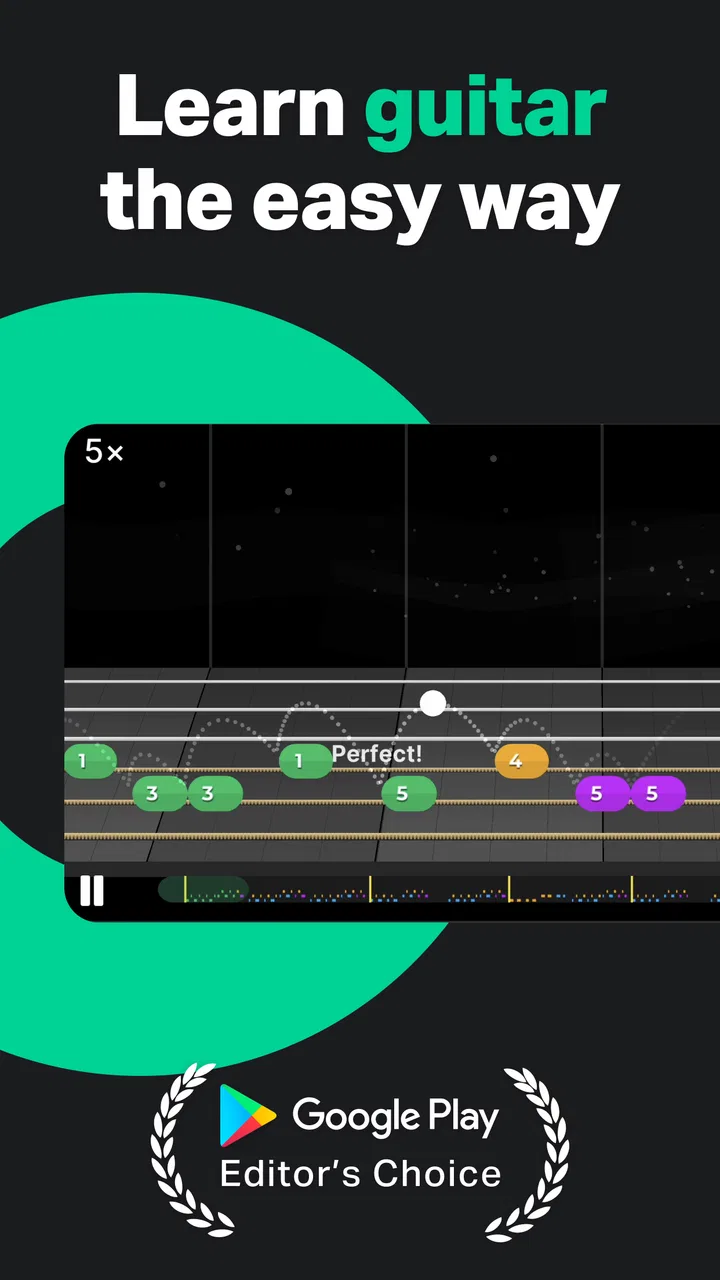
The central idea is straightforward: choose a lesson or song, follow the on-screen guidance, and play along while the app listens for your notes. This is more engaging than reading a chord chart because it gives practice a sense of direction. I found that especially useful when I had only a short window available. Instead of spending several minutes deciding what to work on, I could open the app and begin with a defined exercise.
You May Also Like

 Pandora - Music & Podcasts
Pandora’s Music Is Easy to Start, but Harder to Recover
Pandora’s strength is its low-effort path from a seed to a station. Its weak spot is how much confidence it asks you to place in connection, setup, and quiet recovery.

 8 Ball Pool
 Is Built on Rivalries, Rematches, and Routine
A close look at the rivalries, rematches, shared routines, and unanswered safety questions that turn a quick pool match into a persistent mobile community.

 Samsung Music
’s Quiet Strength Is Playing What You Already Own
Its reach comes less from spectacle than from dependable access to a personal library. That simplicity is both the app’s strongest retention engine and its ceiling.

 AccuWeather: Weather Radar
AccuWeather Review: A Quick, Clear Forecast for Everyday Decisions
For everyday plans, the best forecast is the one you can understand quickly. AccuWeather makes rain timing, radar, and local conditions easy to act on, with a few trade-offs.

 Hill Climb Racing
Why Hill Climb Racing Still Turns Crashes Into One More Run
A tiny car, a bumpy hill and one more upgrade: Hill Climb Racing keeps resurfacing because its simple chaos makes every near-miss feel personal.

 AliExpress - Shopping App
AliExpress Makes Global Shopping Feel Personal, but Shoppers Bear the Risk
AliExpress turns a global marketplace into a pocket-sized discovery engine. Its reach is useful, its shopping loop compelling, and its trade-offs easy to miss.
More From Our News Desk
View All News


The connection becomes important as soon as the app needs to present interactive lesson material or respond to your playing. A reliable network makes the transition between activities feel natural. When the connection is weak, the experience can become less predictable: content may take longer to appear, and the momentum that makes a guided lesson appealing is easier to lose. That is not a small issue for beginners, because stopping to troubleshoot can be enough to end a practice session.
I would not treat Yousician like a book that is always ready on a music stand. It behaves more like a connected service, so I prefer opening it before I am in a hurry. At home, this is rarely difficult. In a shared house, a rehearsal space, or a place with unreliable reception, it is worth allowing extra time before you expect to play.
The interactive approach also changes how I listen to my own playing. Rather than concentrating only on whether a chord feels familiar, I pay attention to timing and accuracy as the app follows along. That can expose rushed changes or notes that do not ring clearly. Still, the feedback should be treated as a useful guide rather than an absolute judge. Phone microphones hear room noise, string noise, and accidental sounds, so a technically correct performance can occasionally be interpreted imperfectly.
Why a stable connection affects motivation
For me, the biggest network-related consequence is not simply waiting. It is the interruption of a habit. A short practice session works because there is little friction between deciding to play and actually playing. If a lesson pauses, has to reload, or does not respond as expected, I am more likely to put the guitar down and tell myself I will try again later.
This is where Yousician differs from a traditional chord book or a downloaded video. A book remains available regardless of reception, and a saved video can be watched without the same kind of live interaction. Those alternatives are less responsive, but they are dependable. Yousician offers more direction and participation, while the usual offline materials offer more control over when and where practice happens.
I recommend a simple routine: start the app while you still have a good connection, select the activity you want, and keep the instrument ready before beginning. That sounds obvious, but it prevents the common mistake of trying to solve setup problems after you have already committed to a brief practice break.
Using it in small mobile practice windows
The app makes the most sense for people who practice in fragments. I can imagine using it after work, during a quiet part of a lunch break, or before bed when I want a defined activity rather than an open-ended search through tutorials. A phone is easier to keep nearby than a computer, and the guided format makes a five-minute decision feel manageable.
There are practical limits to mobile use. You need enough physical room to hold the instrument comfortably while keeping the screen visible. If the phone is flat on a sofa or too far away, checking the next instruction can interrupt your posture. A small stand is more useful than many beginners expect, because it lets you keep both hands focused on the guitar instead of repeatedly reaching for the device.
Audio setup deserves attention too. Playing near a television, conversation, fan, or open window can make recognition less consistent. Headphones may help you hear the lesson clearly, but they do not remove the need for the phone to hear your instrument. I get better results when the device is positioned close enough to capture the guitar without placing it directly beside the sound hole, where the signal can become harsh or unbalanced.
A realistic everyday scenario would be a beginner returning home with only fifteen minutes before dinner. I would choose one focused lesson, tune the guitar, silence nearby distractions, and stop after a clear target rather than jumping through several unrelated activities. That approach prevents the phone from becoming a source of endless browsing. The app is strongest when I use it to structure practice, not when I treat it as a catalogue to explore without a plan.
What changes when the network is unreliable
Connectivity problems are most frustrating at the start of a session. If the app cannot move smoothly from the opening screen to the material I want, I lose the feeling that practice is ready when I am. A weak signal can also be particularly annoying when I am traveling or practicing somewhere unfamiliar, because I may not know whether the problem is the network, the device, or the app itself.
My recovery method is deliberately simple. I first check whether other apps can reach the internet. If they cannot, I move to a more reliable connection rather than repeatedly tapping the same control. If the rest of the phone is online, I close and reopen Yousician, make sure the app is current, and try a shorter activity. I also keep the guitar nearby while troubleshooting; otherwise, the technical interruption becomes a complete break from practice.
When the app does respond but fails to recognize playing accurately, I look at the environment before blaming the lesson. I check tuning, reduce background sound, move the phone, and play individual notes slowly. Beginners often strum harder when recognition fails, but extra volume can make the microphone hear more unwanted noise. A calmer, cleaner signal is usually a better test.
This is one reason I would not rely on the app as my only learning resource. If the connection or recognition is having a bad day, a printed chord reference, a personal notebook, or a teacher’s earlier exercise can keep the session alive. That backup does not weaken the value of Yousician; it makes the overall practice system less fragile.
Being sensible with mobile data
Anyone using the app away from home should think about data before beginning a long session. Interactive lessons and song-based practice can involve more than a static page, and repeated browsing may use more of a mobile allowance than a single short exercise. I prefer starting substantial sessions on Wi-Fi and reserving mobile connections for brief checks or practice when I already know the activity will load smoothly.
I also avoid opening several different lessons simply because they are available. Choosing the next exercise in advance reduces unnecessary loading and keeps the session focused. If you share a connection with other people, practicing during a quiet period can improve responsiveness as well as reduce frustration.
Battery use is another mobile consideration. Screen-on time, audio playback, and microphone use are not ideal for a phone that is already near empty. I would charge the device before a longer session and avoid placing it somewhere that blocks ventilation. These are ordinary habits, but they matter because a lesson interrupted by a dead phone feels very different from a lesson stopped after reaching a musical goal.
Privacy-conscious users may also want to be deliberate about where they practice. Since the learning experience involves the device listening to the instrument, I would choose a comfortable setting and avoid assuming that a busy public place will provide the same feedback as a quiet room. The app can be mobile without every location being equally suitable.
Where Yousician fits among other ways to learn
Compared with one-to-one instruction, Yousician is more convenient and less personal. It can give me a prompt whenever I have time, but it cannot physically correct my wrist angle, notice tension in my shoulders, or adapt its explanation in the nuanced way a good teacher can. A teacher is the better choice for persistent pain, confusing technique problems, or a learner who needs accountability from another person.
Compared with video tutorials, the app feels more active because I am expected to play rather than simply watch. That can make it easier to stay involved. Videos, however, are often better when I want to see a complete performance, compare several explanations, or slow down and study a movement without the pressure of live response.
Compared with books and static chord charts, Yousician is friendlier for someone who does not yet know how to organize practice. The trade-off is dependence on the device and connection. A book is less exciting but wonderfully predictable. I would choose the app for structure and immediate participation, then keep static references available for moments when I want uninterrupted repetition.
The purchase model is worth considering before committing emotionally to the full learning path. The app itself is free to start, but in-app purchases can range from $1.99 to $209.99 per item. I would spend time testing the basic experience, checking how well the recognition works with my guitar and room, and deciding whether the available material fits my goals before paying for anything. The most expensive option is not automatically the right one for a casual learner.
Who will enjoy it, and who should choose something else
I think Yousician is a strong match for a beginner who wants a clear starting point, likes immediate feedback, and can practice in a reasonably quiet place with dependable internet. It also suits returning players who know a few chords but need help rebuilding consistency. The guided format can turn vague intentions into a repeatable routine.
It is less suitable for someone who wants complete freedom from a lesson path, practices mainly in locations with poor reception, or dislikes playing while looking at a screen. It may also disappoint an advanced guitarist seeking detailed interpretation, highly individualized critique, or deep theory instruction. In those cases, a teacher, specialist course, or carefully chosen reference material may offer more depth.
My most useful tip is to separate technical testing from musical practice. On the first day, spend a few minutes checking the microphone position, tuning, room noise, and connection. Once those basics work, begin setting musical goals such as cleaner chord changes or steadier rhythm. Otherwise, it is easy to mistake a setup problem for a lack of ability.
My connectivity verdict
Yousician succeeds because it makes guitar practice feel guided without requiring me to arrange a lesson every time I pick up the instrument. Its interactive response is more motivating than a passive tutorial, and its mobile format fits naturally into short daily sessions. The same qualities create its main weakness: the experience is less dependable when the network, audio environment, or phone setup is not cooperating.
I would recommend trying it on a stable Wi-Fi connection, with the phone positioned carefully and the guitar tuned before starting. Use it as the organized center of a practice routine, but keep a simple offline reference or personal exercise nearby for recovery when technology gets in the way. That balance gives the app room to do what it does best without making your progress depend on one connection.
After using it this way, my opinion is positive but conditional. Its best feature is not merely that it teaches guitar; it removes the uncertainty of deciding what to practice next. If you value that structure and can provide a stable environment, Yousician is an approachable education app worth exploring. If uninterrupted access and personal correction matter more than interactive guidance, a teacher, book, or saved lesson will probably serve you better.
FAQs for Yousician: Learn & Play Guitar
01What instruments can I learn with Yousician?
Yousician offers lessons for a variety of instruments, including guitar, piano, ukulele, bass, and even singing. The app provides a comprehensive learning experience with thousands of songs and exercises tailored to your skill level, making it suitable for both beginners and advanced musicians.
02Is Yousician suitable for beginners?
Yes, Yousician is designed to cater to all skill levels, including complete beginners. The app offers step-by-step tutorials and instant feedback on your playing, helping you improve quickly. Its user-friendly interface and structured lessons make it an ideal choice for those just starting out on their musical journey.
03Does Yousician require any additional equipment?
While no additional equipment is strictly necessary, having a real instrument is recommended for the best experience. Yousician uses your device's microphone to listen to your playing and provide feedback. For enhanced learning, consider using headphones and a music stand to keep your device at eye level.
04How does Yousician provide feedback on my playing?
Yousician utilizes your device's microphone to listen as you play along with the lessons. The app provides real-time feedback, showing you which notes you played correctly and which ones need improvement. This feature helps you adjust your playing technique and timing, enhancing your learning experience.
05Is there a cost associated with using Yousician?
Yousician offers both a free version and a premium subscription. The free version includes limited daily lesson time and access to basic features. The premium subscription unlocks unlimited lesson time, a wider range of songs, and advanced features. Pricing varies based on the subscription plan you choose.
Pros
- Engaging lessons for all skill levels.
- Wide range of instruments supported.
- Real-time feedback improves accuracy.
- Fun challenges keep learning exciting.
- High-quality video tutorials available.
Cons
- Requires a subscription for full access.
- Limited offline functionality.
- Occasional app performance issues.
- Some features require premium upgrade.
- In-app ads can be distracting.

Yousician: Learn & Play Guitar
Gallery